
Shipping & Freight Times
Shipping & Freight Times
Global Freight & Delivery
Shipping & Freight Times
Global Freight & Delivery
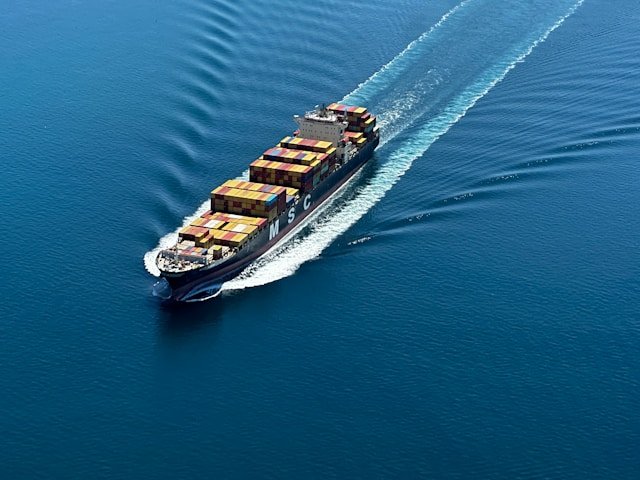
Pronimen ships infrastructure equipment for the Telco & Data, Military, Rail and Construction sectors from major Chinese ports including Shanghai, Ningbo, and Shenzhen. Goods are dispatched via sea freight (container shipping) or air freight, depending on the order requirements and agreed delivery schedule.
Sea freight transit to continental Europe averages approximately 60 days; other destinations vary accordingly. Air freight delivery is typically 3–7 days airport-to-airport with 1–2 days onward delivery. Detailed comparisons and destination-specific estimates are provided below. See also Production Lead Times and Products & Technical Data.
Quick Access
Related FAQ’s
Sea freight transit times range from 45–65 days depending on destination (approximately 60 days to continental Europe, shorter to Asia-Pacific, longer to the Americas). Air freight is 3–7 days airport-to-airport, with 1–2 business days onward delivery.
Yes. Air freight is available for urgent orders, replacement stock, and smaller consignments. Typical transit is 3–7 days airport-to-airport, with onward delivery within 1–2 business days of arrival.
Pronimen ships to any destination accessible by container port or cargo airport. Regular routes serve Europe, Asia-Pacific, Middle East and Africa, and the Americas, covering both developed and emerging markets.
Pronimen manages all export documentation, customs clearance at both origin and destination, freight forwarding coordination, and onward delivery scheduling. Complete shipping documentation accompanies every consignment.
Once a container is on the water, no supplier can control what happens in transit. Pronimen’s primary recommendation is to order ahead of time to build buffer into the schedule. Before dispatch, we monitor conditions and can adjust routing or transfer to air freight where warranted. Multiple forwarder relationships and advance scheduling help reduce exposure, but forward planning remains the most effective measure.
Freight Data
Lead Times & Freight Comparison
Sea freight transit times are determined by destination, departure port, and carrier. The figures below represent realistic operational averages.
Freight Method Comparison
| Method | Typical Duration | Best For | Options |
|---|---|---|---|
| Air Freight | 3–7 days + 1–2 days onward | Urgent orders, critical infrastructure, network outages | Cargo pallets, express handling |
| Sea Freight | 45–65 days | Bulk orders, planned rollouts, long-term projects | FCL (20ft / 40ft) & LCL |
| Hybrid | Variable | Phased deployments, mixed urgency | Air + Sea combined |
Destination-Dependent Lead Times
| Destination Region | Approx. Sea Freight |
|---|---|
| Europe (Continental) | ~60 Days |
| Middle East | ~30–40 Days |
| Asia-Pacific | ~15–25 Days |
| Africa | ~45–55 Days |
| Americas | ~50–65 Days |
* All estimates are approximate and subject to variation based on specific port, carrier availability, and prevailing shipping conditions.
Contingency & Global Disruption Planning (2026 Shipping Update)
Ocean freight is subject to disruption from geopolitical and environmental events, including Suez Canal closures, Strait of Hormuz restrictions, regional shipping bans, and port congestion. Such events can extend a 60-day transit to 80 or 90 days. Once a container is on the water, the reality is that no supplier can control what happens to it in transit.
Pronimen’s primary recommendation is to order ahead of time. The most effective way to minimise the impact of global disruption is forward planning and building lead time into the project schedule. On our side, we work with multiple freight forwarders and monitor maritime conditions continuously. Where a route is at risk before dispatch, we can look at alternative scheduling or, where warranted, transfer to air freight. The 2026 update incorporates additional forward buffer time on long-haul ocean routes in response to the sustained disruption pattern of recent years.
Freight Methods
Freight Methods
The standard shipping method for most Pronimen orders. Goods are palletised and loaded into 20ft or 40ft containers departing from Shanghai, Ningbo, or Shenzhen, depending on the producing facility. Full container loads (FCL) and less-than-container loads (LCL) are both available depending on order volume.
Available for urgent orders, replacement stock, or smaller consignments requiring accelerated delivery. Transit is typically 3–7 days airport-to-airport, with onward delivery within 1–2 business days of arrival.
Supply Chain
End-to-End Logistics
Pronimen manages the complete logistics chain from factory to destination. Export documentation, customs clearance at origin and destination, carrier coordination, and final delivery scheduling are handled by the Pronimen logistics team.
Worldwide Delivery
Global Coverage
Pronimen ships to any destination accessible by container port or cargo airport. The forwarder network covers all continents, serving both developed and emerging markets. The logistics model supports both large-scale infrastructure rollouts and individual urgent consignments.
Frequently Raised Concerns
The three most common questions raised by procurement and project teams regarding international freight:
Export Packaging
Packaging & Export Standards
All Pronimen goods are packed to export standard prior to dispatch. Packaging specifications are determined by product type, freight method, and destination requirements. The objective is to ensure goods arrive in the same condition as they left the factory, regardless of transit duration or handling stages.
- Inner packaging – individual product wrapping and protection appropriate to the item (foam, bubble wrap, anti-static bags for sensitive components)
- Outer cartons – corrugated export-grade cartons, labelled with product codes, quantities, and handling instructions
- Palletisation – goods are palletised, shrink-wrapped, and strapped for container or air cargo loading
- Container loading – load plans are prepared for FCL shipments to optimise space and secure goods in transit
- Marking and labelling – all packages carry shipping marks, PO references, and any customer-specified labelling
Trade Terms & Visibility
INCO Terms & Responsibilities
Pronimen operates under standard international commercial terms. The table below sets out which party is responsible for each cost and risk under the INCO terms most commonly used for our shipments.
| Stage | FOB | CIF | DDP |
|---|---|---|---|
| Export Packing | Pronimen | Pronimen | Pronimen |
| Inland Freight (origin) | Pronimen | Pronimen | Pronimen |
| Export Customs | Pronimen | Pronimen | Pronimen |
| Loading on Vessel | Pronimen | Pronimen | Pronimen |
| Sea / Air Freight | Buyer | Pronimen | Pronimen |
| Marine Insurance | Buyer | Pronimen | Pronimen |
| Discharge at Destination | Buyer | Buyer | Pronimen |
| Import Customs & Duties | Buyer | Buyer | Pronimen |
| Final Delivery | Buyer | Buyer | Pronimen |
| Risk Transfers | On board vessel | On board vessel | At buyer site |
Every consignment is tracked from dispatch through to delivery. Tracking references, vessel or flight details, and milestone updates are issued via the Pronimen PO tracking system. EXW, FCA, CIP and other terms available on request.
Have a question or a specification? Let’s talk.
Whether it is a technical query, a project specification, a production enquiry, or a shipping schedule, get in touch and the right person on our team will respond personally.